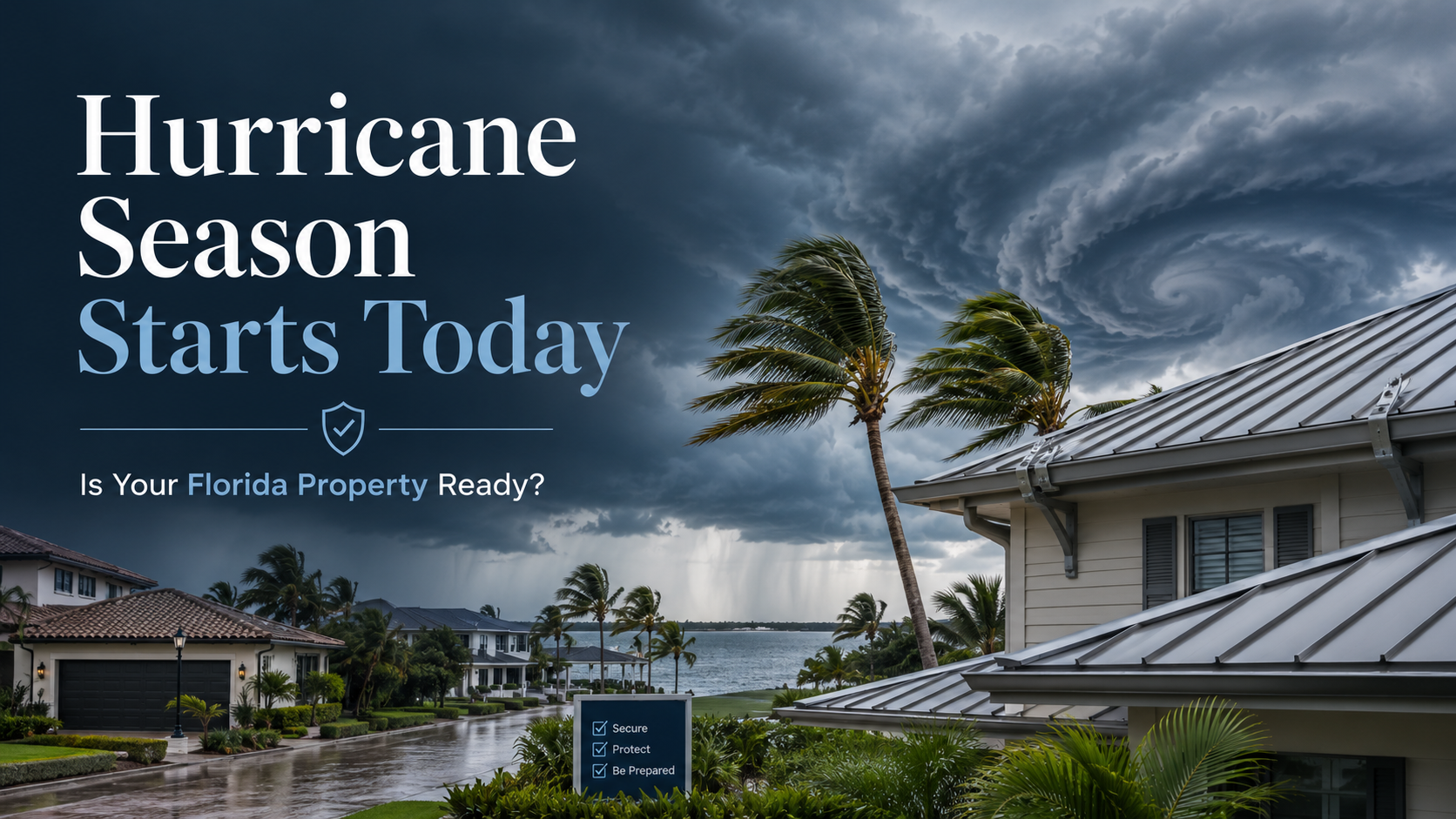
Hurricane season officially opens June 1. Here’s what Central Florida homeowners need to know — and do — right now.
Atlantic hurricane season runs from June 1 through November 30. Every year, that date arrives and homeowners across Central Florida think the same thing: I should really get my roof looked at. Then life gets busy, the forecast looks quiet, and the inspection never happens — until it does, three days before a storm makes landfall.
Don’t let that be you this year.
At Orange Contracting and Roofing, we’ve inspected and restored hundreds of roofs across Maitland, Orlando, Winter Garden, Ocoee, and the surrounding communities. What we see every season is the same: the homeowners who act before June 1 are in a dramatically better position — financially, structurally, and with their insurance company — than the ones who wait.
Here’s everything you need to know heading into the 2026 season.
What the 2026 Forecast Actually Means for You
The good news: forecasters are calling for a below-average season. NOAA’s official 2026 Atlantic hurricane season outlook predicts 8–14 named storms, 3–6 hurricanes, and 1–3 major hurricanes — compared to a historical average of 14 named storms, 7 hurricanes, and 3 major storms. Both NOAA and Colorado State University’s Tropical Meteorology Project cite a developing El Niño as the primary driver of suppressed Atlantic activity this year.
The important caveat — and NOAA itself made this point explicitly: it only takes one. Category 5 storms have struck Florida during below-average seasons. El Niño doesn’t protect the Gulf Coast or Central Florida from a single well-tracked system. And remember: just last year, the 2025 season produced three Category 5 hurricanes despite a relatively modest named storm count.
After back-to-back active seasons in 2024 and 2025 — which saw Hurricanes Helene and Milton generate more than 100,000 homeowner insurance claims in Florida and an estimated $1.9 billion in insured losses from Milton alone — this area knows better than most how quickly a forecast can become irrelevant.
A “quiet” season is not a reason to skip your inspection. It’s a reason to schedule it without the rush.
Why Your Roof Is the First Line of Defense
Your roof is the most storm-vulnerable component of your home’s envelope. Wind damage to roofing systems accounts for the majority of hurricane-related homeowner insurance claims in Florida, and Central Florida’s risk is more significant than many residents realize.
When Hurricane Milton made landfall near Siesta Key in October 2024, its wind field, rain bands, and embedded tornado activity extended well into Orange, Osceola, and Seminole counties. Homeowners in Orlando suburbs who had never seen direct hurricane damage suddenly found themselves with missing shingles, compromised flashing, and active water intrusion — often without knowing it until weeks later.
Here’s what a compromised roof can mean for your claim:
- Pre-existing damage can give your carrier grounds to dispute what was storm-caused vs. what was neglected maintenance
- Undiscovered damage that festers for months leads to secondary losses — mold, wood rot, structural deterioration — that are far more expensive than the original repair
- No baseline documentation means you’re arguing from memory against an adjuster with photos; that’s a fight you don’t want
A professional inspection before the season starts addresses all three of those problems. If you want to understand how our claims process works from start to finish, see how Orange Contracting handles insurance restoration projects.
What a Pre-Season Roof Inspection Covers
When one of our licensed inspectors walks your roof before hurricane season, we’re looking at the complete system — not just shingles:
Shingles and surface materials Missing, cracked, curling, or granule-depleted shingles are the most visible sign of a roof reaching the end of its service life. In Florida’s UV environment, asphalt shingles typically show real degradation at 15–20 years. If you’re not sure where your roof stands, our free Florida Roof Lifespan Calculator gives you an instant estimate based on your specific roof type and age.
Flashing at all penetrations Pipe boots, ridge caps, chimney flashing, skylights, and valley metal are where water finds its way in. Improperly sealed or corroded flashing is one of the most common causes of interior water damage after a storm — and one of the easiest things to address before the season.
Nail patterns and fastener integrity Florida’s hurricane codes require specific nail schedules and patterns. Roofs that were installed before the post-Andrew code reforms, or that were improperly fastened, are significantly more vulnerable to wind uplift. This is only visible to someone on the roof.
Soffit, fascia, and drip edge These edge components are frequently the first place wind gains access under a roof system. Damaged or deteriorated soffit panels can allow wind to pressurize your attic, dramatically increasing the risk of roof-to-wall connection failure.
Gutters and drainage Blocked gutters cause water to back up under your roof edge. In a storm with sustained rain — which Florida hurricanes routinely deliver — that’s the difference between controlled drainage and interior flooding.
Underlayment condition What’s under your shingles matters as much as what’s on top. Florida code specifies underlayment requirements that directly affect how your roof performs in wind-driven rain. We covered this in depth in our post on roof underlayment for Florida homes.
Attic inspection Staining, daylight penetration, compromised decking, or inadequate ventilation in the attic often tells a more honest story about your roof’s condition than what’s visible from the exterior.
The Insurance Angle: Why Documentation Matters More Than Ever
Florida’s property insurance market has hardened significantly over the past few years. Many carriers are scrutinizing roof age and condition more aggressively — and some are non-renewing policies on homes with older roofs outright. If your roof is approaching or past 15 years old, your coverage situation deserves a hard look before the season. We’ve also written about the four-point inspection requirements that most Florida insurers now require for homes over 20 years old — that’s worth reading if you haven’t seen it.
More practically: if a hurricane does cause damage to your home this season, the quality of your claim outcome will be heavily influenced by how well-documented your roof’s pre-storm condition was.
A professional pre-season inspection gives you:
- A dated inspection report documenting the current condition of every roof component
- Photographs taken before any storm event — critical evidence if a carrier tries to attribute new damage to pre-existing wear
- Identification of any maintenance items that should be addressed now, before they become ammunition for a denial
At Orange Contracting, our combination of roofing contractor expertise and in-house licensed adjuster experience means we understand both sides of this equation. We know what insurers look for — because we’ve worked on both sides of the claim. You can review our full roofing and restoration services here.
What You Can Do Right Now
You don’t have to wait for a storm warning to get ready. Here’s a simple pre-season action list:
1. Schedule a professional roof inspection. June 1 is here. Every week you wait is a week of the season without a baseline on your roof’s condition. Our inspections are thorough, documented, and free for Central Florida homeowners.
2. Get an instant estimate if you already know you need work. If your roof is aging and you want to know what replacement might cost before a storm forces your hand, use our free Instant Estimator — satellite-based pricing with no appointment needed.
3. Pull your insurance policy and read your hurricane deductible. Most Florida policies carry a hurricane deductible separate from your regular deductible — typically 2–5% of your home’s insured value. On a $300,000 home, that’s $6,000–$15,000. Know your number before you need it. Our post on ACV vs. RCV roof coverage explains how your coverage type affects what you actually receive after a loss.
4. Take pre-season photos. Walk around your home and photograph every side of your roof before any storms develop. Date-stamp them and store them in cloud backup or email them to yourself. These photos can be invaluable if you need to dispute a carrier’s damage assessment later.
5. Trim overhanging trees. Branches and limbs are among the leading causes of residential roof punctures during Florida storms. A certified arborist or landscaper can address this quickly before the season heats up.
6. Check the My Safe Florida Home Program. Florida’s My Safe Florida Home Program offers free wind mitigation inspections and matching grants up to $10,000 for hurricane-hardening improvements. Funding has been limited in past years — if you haven’t applied, check eligibility now before this season’s allocations run out.
Why Central Florida Homeowners Choose Orange Contracting
We’re not a storm-chasing roofing company that shows up after the hurricane and disappears six months later. Orange Contracting and Roofing is based in Maitland, Florida. We’re licensed as a roofing contractor and residential contractor (CRC1336049 · CCC1337502), and we’ve been serving Central Florida homeowners through every kind of market condition — retail re-roofs, insurance restoration projects, and everything in between.
What sets us apart is the background we bring to every inspection. Our team understands how insurance claims work because we’ve worked them from the contractor side, the adjuster side, and the public adjusting side. When we inspect your roof and document our findings, we’re building the kind of record that holds up through the claims process — not just a sales tool.
Don’t wait until a named storm is in the Gulf to find out where your roof stands.
Schedule Your Free Roof Inspection | Get an Instant Estimate
📞 407-205-2676 | Serving Maitland, Orlando, Winter Garden, Ocoee, Kissimmee, and all of Central Florida
Orange Contracting and Roofing | CRC1336049 · CCC1337502 | Maitland, FL