
Summertime in Central Florida is hot, and that means air conditioners are working overtime. For homeowners in Orlando and surrounding areas, high cooling bills can be a real concern. The good news is that your roof can help. By choosing energy-efficient roofing solutions, you can keep your home cooler and reduce energy costs in your Florida home. In this post, we’ll explain how cool roofs, proper ventilation, and radiant barriers can lower your A/C bills during our Central Florida summers.
What Is a “Cool Roof” and Why Does Orlando Need Them?
A cool roof is a roof designed to reflect more sunlight and absorb less heat than a standard roof. Think of it like wearing a light-colored shirt on a sunny day instead of a dark shirt – the lighter one keeps you cooler. In Florida’s intense sun, this makes a big difference. Traditional dark roofs can reach 150°F or more on a hot afternoon, heating up your attic and home energy.gov. A reflective cool roof can be over 50°F cooler under the same conditions energy.gov. With less heat transferring into your house, your air conditioning doesn’t have to work as hard. In fact, studies have found that cool roofs can reduce cooling costs by an average of 7% to 15% coatingscoffeeshop.com. That means noticeable savings on your electric bill and a more comfortable home.
Cool roofs Orlando homeowners install often use special materials or coatings to bounce sunlight away. By reflecting sunlight rather than absorbing it, these roofs keep indoor temperatures lower and lower your A/C bills in Central Florida. Nearly any home can benefit from a cool roof energy.gov, especially in warm, sunny climates like ours. Before we dive into specific technologies, remember that an efficient roof not only saves you money but can also make your home more comfortable on those blistering summer days.
Cool Roofing Technologies to Keep Your Home Cool
Modern roofing materials offer several ways to create a cool, energy-efficient roof. Here are some cool roofing technologies and options that can help Central Florida homeowners beat the heat:
- Reflective Shingles: These look like ordinary asphalt shingles but are made with special reflective granules. They bounce a higher portion of sunlight away from your roof. Even darker-colored “cool” shingles use advanced pigments to reflect invisible infrared light. While a plain black shingle absorbs most heat, a reflective roofing shingle can reflect much more, keeping your roof cooler. For example, white or light-colored shingles can reflect 60–90% of sunlight energy.gov. Even “cool” dark shingles might reflect 30–60%, which is much higher than standard materials energy.gov.
- Light-Colored Roofing Materials: Choosing a lighter color for your roof can significantly reduce heat absorption. Whether you use asphalt shingles, metal roofing, or tiles, opting for white, light gray, or tan can make a difference. In the Central Florida sun, a pale or white roof will stay cooler (and transfer less heat) than a dark brown or black roof. Many homeowners compare it to parking a white car in the sun versus a black car – the lighter one is cooler inside.
- ENERGY STAR®-Rated Options: Some roofing products are ENERGY STAR-rated for meeting high standards of reflectivity and energy efficiency. An ENERGY STAR shingle or metal roof has been tested to ensure it reflects a good amount of the sun’s energy away from your home. Using ENERGY STAR roofing materials can significantly cut cooling costs while also extending the life of your roof. These products come in various styles – from specialized reflective shingles to high-reflectivity metal panels – so you don’t have to sacrifice appearance for efficiency.
- Cool Roof Coatings: If you aren’t ready to replace your whole roof, another option is applying a reflective roof coating. This is a special paint-like coating (often bright white or silver) that can be applied to the roof’s surface. It adds reflectivity to reduce heat absorption. Cool roof coatings are more common on flat or low-slope roofs (like on some porch additions or mobile homes) but can work on other roof types as well. They can lower the roof surface temperature dramatically, which in turn helps keep the attic cooler.
- Reflective Metal and Tile Roofs: Metal roofing is popular in Florida for its durability, but it can also be very energy-efficient. Metal panels with light colors or reflective finishes send a large portion of the sun’s rays away. Likewise, certain tile roofs (such as white concrete or clay tiles) naturally stay cooler under the sun. Some tiles can be coated or glazed in light colors to improve reflectance. These materials not only help reduce energy costs for your home by keeping it cooler, but they also often qualify as “cool roof” materials by Energy Star or Florida building standards.
All of these options aim to do the same thing: keep your roof and attic cooler under the blazing Florida sun. By reflecting sunlight, they prevent your home from turning into a heat trap. As a bonus, a cooler roof undergoes less thermal stress (expansion and contraction from heat), which might help it last longer. And when the roof stays cooler, your attic and interior stay cooler, leading to lower AC use and reduced energy costs for Florida homes like yours.
The Importance of Attic Ventilation in Florida
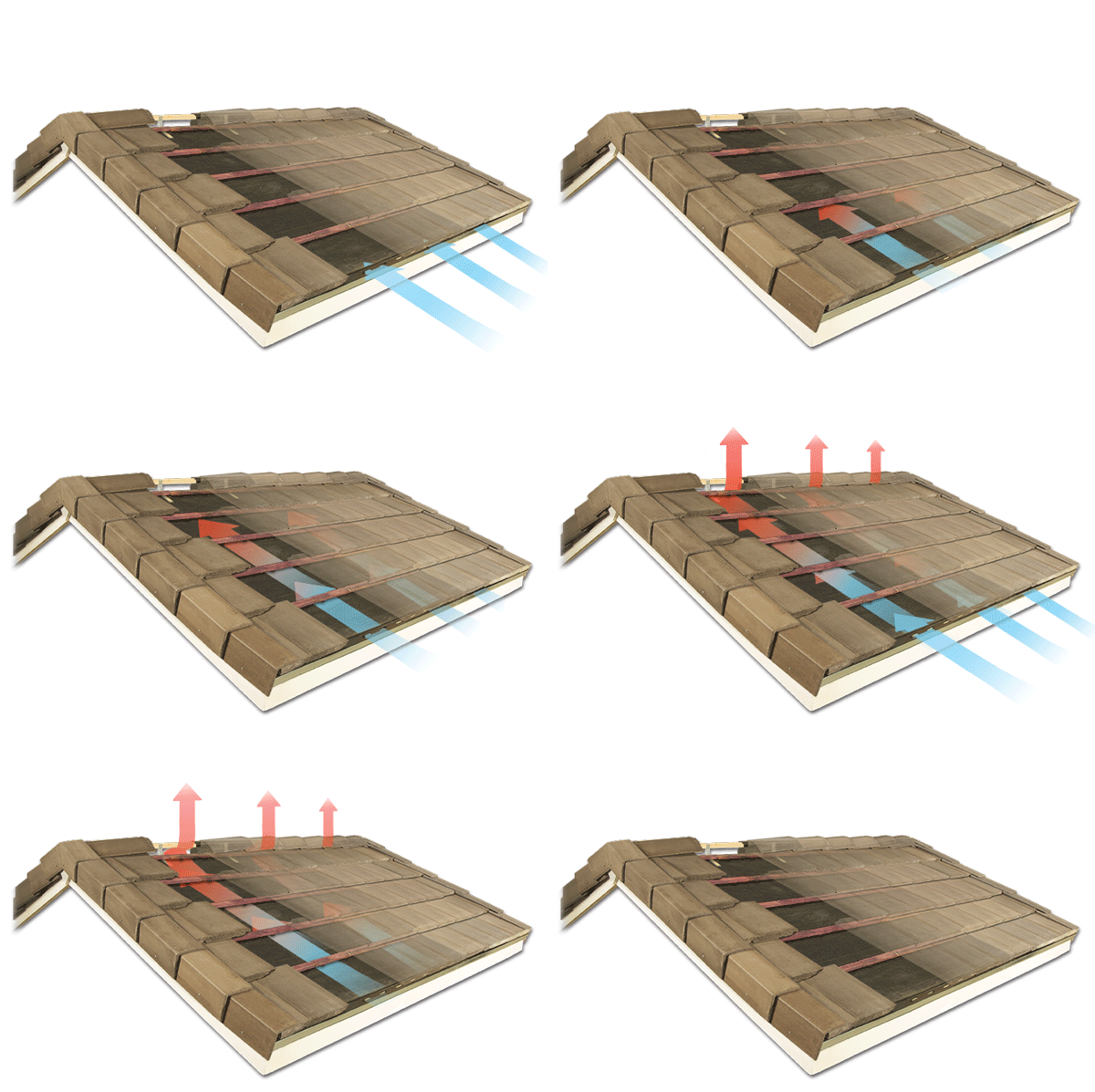
Even with a cool roofing material, your attic can build up heat if it isn’t ventilated properly. Proper attic ventilation is a key part of an energy-efficient roofing system, especially in Central Florida. Ventilation means letting your attic “breathe” – hot air escapes from the attic and cooler outside air flows in, usually through a combination of ridge vents, soffit vents, gable vents, or attic fans.
Why does this matter? Without enough ventilation, heat can get trapped in the attic space. On a 95°F summer day, an under-ventilated Florida attic can reach temperatures well over 150°F. That heat will start to radiate down into your living space, even through good insulation. Your poor air conditioner then has to fight all that extra heat. A well-ventilated attic, by contrast, can be dozens of degrees cooler. In fact, attic temperatures can be 50°F lower with proper ventilationsolarlightsandmore.com. For example, instead of 160°F, a ventilated attic might be closer to 110°F – much better!
By letting the hottest air out of your attic, ventilation reduces the heat load on your home. This means your AC can keep the house cool with less effort. Some experts estimate that good roof ventilation can cut cooling costs by roughly 30% because your air conditioner runs less often spencerheatingandair.com. At the very least, it prevents unnecessary heat buildup.
There are a few ways to improve attic ventilation:
- Ridge vents (installed along the peak of the roof) let hot air escape at the top.
- Soffit vents (under the eaves of the roof) let cooler outside air flow into the attic at the bottom, pushing hot air upward.
- Gable vents (on the side walls of an attic) can aid cross-breeze in some homes.
- Attic fans (solar or electric) actively pull hot air out and can be useful if passive vents aren’t enough.
In Florida’s humid climate, ventilation also helps with moisture. It keeps the air moving, which can prevent mold and wood rot by drying out the attic. But from an energy standpoint, the biggest benefit is a cooler attic that lightens the load on your AC. It can even help extend the life of your air conditioner since the unit doesn’t have to run as long or as hard to cool your house solarlightsandmore.com. Plus, many shingle manufacturers require proper ventilation for their warranties, because trapped heat can bake the roof from below. So, ventilation is truly a win-win for efficiency and for your roof’s health.
Radiant Barriers: Reflecting Heat Away from Your Home
Another powerful tool for energy-efficient roofing is the radiant barrier. Radiant barriers are all about reflecting heat. They are typically made of a shiny foil-like material (often aluminum) and are installed in your attic—usually stapled to the underside of the roof deck or rafters. Their job is to reflect radiant heat coming from the hot roof before it can heat up the rest of the attic and your house.
Here’s how it works: when the sun heats your roof, the roofing material and wood sheathing get hot and start to radiate heat downward (like a heater on your ceiling). A radiant barrier acts like a mirror for that radiant heat. It can reflect much of that heat back toward the roof, keeping the attic space cooler. The shiny surface also has very low emissivity, meaning it doesn’t re-emit much heat on the other side. The result is less heat making it into your insulation and living areas.
Radiant barriers are especially effective in hot, sunny climates like Central Florida myfloridahomeenergy.com. In our area, the attic is a major source of heat gain in the home. By installing a radiant barrier, homeowners can save on air-conditioning costs because the AC has less heat to remove. Studies by the U.S. Department of Energy and Florida’s Solar Energy Center have found that radiant barriers can reduce cooling costs by around 5% to 10% in hot climates fsec.ucf.edu. While that might sound small, think of it this way: if you spend $200 a month on summer electricity, up to $20 of that could be saved just by this foil in your attic. Over the years, it adds up. Some research in Florida showed an attic radiant barrier can lower the overall annual electricity use by about 3–6% fsec.ucf.edu, which is significant given how much of our electricity goes to cooling.
Radiant barriers work best if:
- Your attic is poorly insulated – The less insulation you have, the more a radiant barrier helps (though you should also add insulation if needed!). In an attic with very high insulation (like R-30+), the barrier will still help but the percentage savings might be a bit less.
- Your roof gets full sun – The more direct sunlight beating on the roof, the more heat the barrier can block.
- Attic ventilation is in place – Radiant barriers pair well with good ventilation. The barrier reflects heat, and ventilation helps carry that heat out of the attic vents. This one-two punch keeps the attic air much cooler than it would otherwise be.
Installing a radiant barrier can be done during a new roof installation or added to an existing attic. The material often comes in rolls that are spread out under the roof. It’s important to leave an air gap on at least one side of the foil for it to work properly (you can’t sandwich it tightly between wood and insulation, or it will conduct heat instead of reflecting it). Also, if you’re installing one, try to keep the reflective side clean and dust-free; a dusty radiant barrier is less effective because it can’t reflect as well.
In summary, a radiant barrier is like giving your home a thermal shield against the Florida sun. By reflecting heat away, it helps keep your attic cooler and your energy bills lower.
Benefits of Energy-Efficient Roofing for Central Florida Homes
Upgrading your roof’s efficiency pays off in more ways than one. Here are some key benefits of cool, energy-efficient roofing for Orlando and Central Florida homeowners:
- Lower Cooling Bills: The most obvious benefit is saving money. By reducing heat absorption, a cool roof cuts down on air conditioning needs energy.gov. You’ll notice your A/C runs less often or for shorter cycles, which means lower electricity bills even in the peak of summer. Over time, these savings can be substantial, especially as energy prices rise.
- Improved Indoor Comfort: When your roof and attic aren’t super-heated, your living space stays cooler and more stable in temperature. You’ll feel more comfortable on the hottest afternoons and evenings. In fact, if your home ever struggles to stay cool, a reflective roof or better ventilation can make a noticeable difference in indoor temperatures. Some studies noted that in homes without AC, a cool roof can lower indoor temps by several degrees epa.gov. Even with AC, you’ll feel more consistent comfort.
- Longer Roof and AC Lifespan: High heat can be tough on both roofing materials and your cooling equipment. An overheated attic can bake the underside of your roof, causing shingles to age faster. It also forces your air conditioner to run constantly. By keeping temperatures down, an efficient roof reduces strain on your HVAC system (helping your A/C last longer with fewer repairs) and may extend the life of your roof shingles by preventing extreme heat damage solarlightsandmore.com.
- Environmental Benefits: Using less energy for cooling is also good for the environment. When many homes in a community have cool roofs, it can even help lower the local outdoor air temperature and reduce the “urban heat island” effect energy.gov. Plus, using less electricity means power plants burn fewer fossil fuels, cutting down on greenhouse gas emissions. It’s a small step that, collectively, makes a difference in our environment.
- Potential Rebates or Incentives: Because of these benefits, there are sometimes rebates or incentives available for energy-efficient upgrades like cool roofing or adding ventilation. For example, some utility companies or government programs offer rebates for installing an ENERGY STAR-rated roof. While this isn’t guaranteed, it’s worth checking for any programs in Florida that encourage cool roofs or attic improvements – it could save you some upfront cost.
- Increased Home Value: Lastly, improvements that increase energy efficiency can make your home more attractive to future buyers. Many modern buyers in Florida appreciate lower operating costs and eco-friendly features. An Energy Star-rated roof or newly installed radiant barrier and vents can be a selling point, signaling that the home has lower utility bills. It’s an investment that can pay off now and later.
With all these advantages, it’s clear that an energy-efficient roof is more than just a trend – it’s a smart choice for Central Florida living. Whether you’re building a new home, replacing an aging roof, or just looking for ways to beat the heat, consider these roofing upgrades. They work together to keep your home cool and your energy costs down: reflective materials bounce off the sun’s rays, ventilation lets trapped heat escape, and radiant barriers stop radiant heat in its tracks.
Stay Cool and Save: Your Next Steps
Every home is different, and the best roofing solution for one house might not be the same for another. This is where a professional can help. If you’re tired of high A/C bills and are curious about cool roofing options, proper ventilation, or radiant barriers, Orange Contracting and Roofing is here for you. We have experience with reflective roofing in Central Florida, attic ventilation systems, and energy-saving upgrades. Our team can inspect your current roof and attic and identify ways to make your home cooler and more efficient.
Ready to stay cooler this summer and save money on your utility bills? Contact Orange Contracting and Roofing for an expert roof inspection or consultation. We’ll help you explore the best energy-efficient roofing options for your Central Florida home – from cool roofs Orlando homeowners trust, to attic upgrades that make a real difference. Let us show you how a few smart changes to your roof can lead to a more comfortable home and lower A/C costs. Stay cool, save money, and enjoy peace of mind knowing your roof is working hard for you!
Call Orange Contracting and Roofing at 407-205-2676 or email contact@myorangecontracting.com
The company’s office is located at 105 Candace Dr., Suite 129, Maitland, FL 32751. Taking this step can help ensure a home is well-prepared to face the demands of the Central Florida climate for years to come.